
ARCHITEKTON 1 2016
Park Rzeźby na Bródnie, Warszawa


ARCHITEKTON 2 2017
Centrum Rzeźby Polskiej w Orońsku


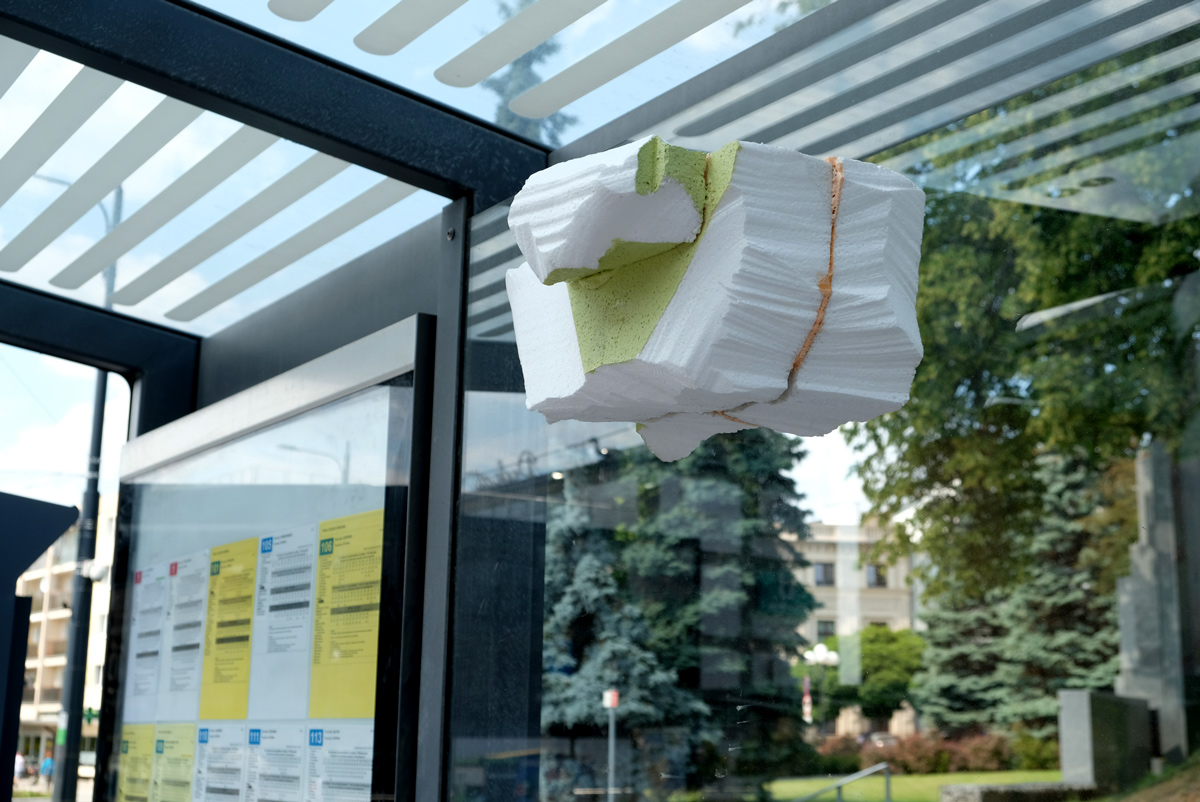
"Ocieplacze" to interwencja w kilku punktach przestrzeni miejskiej Olsztyna, które nie są “ostyropianowane”. Zabieg wpisuje się i komentuje w sposób humorystyczny tendencje pozornego odnawiania elewacji budynków. Pączkujący, długotrwały trend wspólnot mieszkaniowych obserwowany z niepokojem przez wyczulonego estetycznie mieszkańca wciąż narasta niczym, grzyb- huba. Projekt Ocieplacz zadrażnia przestrzeń miejską, jest swojskim odnośnikiem do panującej (błędnej) tendencji dbałości
o architekturę. Ocieplacz niczym wirus przenosi się w miejsca, które bronią się swoją formą
i funkcją przed styropianową inwazją.
Punktem wyjścia do powstałych form jest styropianowy sześcian, którego forma została naruszona swobodnym ruchem ręki przy użyciu drutu oporowego. Na jej płaszczyznach pojawiają się barwy, najczęściej wybierane podczas termomodernizacji budynków.
Wykorzystane materiały pochodzą z recyklingu.
Działanie zostało zrealizowane na zaproszenie MOK Olsztyn i Galerii Dobro, w ramach wystawy „Błąd”.
'Ocieplacz' is an intervention at several locations within Olsztyn’s urban space which have not been to insulate with polystyrene. The project engages with and humorously comments on the trend of superficially renovating building facades. This rampant, long-standing trend amongst housing estates- observed with concern by the aesthetically sensitive resident- continues to spread like
a mushroom.
The 'Ocieplacz' project disrupts the urban landscape; it is a familiar reference to the prevailing (misguided) trend of concern for architecture.
Like a virus, 'Ocieplacz' spreads to places that defend themselves, through their form and function, against the polystyrene invasion.
The starting point for the resulting forms is
a polystyrene cube, the shape of which has been altered by the free movement of the hand whilst using a support wire. Colors appear on its surfaces- colors most commonly chosen during the thermal modernisation of buildings.
The materials used are recycled.
The project was carried out as part of the ‘Błąd’ exhibition at the invitation of the MOK Olsztyn
and the Dobro Gallery.
"Ocieplacz" to interwencja w kilku punktach przestrzeni miejskiej Olsztyna, które nie są “ostyropianowane”. Zabieg wpisuje się i komentuje w sposób humorystyczny tendencje pozornego odnawiania elewacji budynków.
Pączkujący, długotrwały trend wspólnot mieszkaniowych obserwowany
z niepokojem przez wyczulonego estetycznie mieszkańca wciąż narasta niczym, grzyb-huba. Projekt Ocieplacz zadrażnia przestrzeń miejską, jest swojskim odnośnikiem do panującej (błędnej) tendencji dbałości
o architekturę. Ocieplacz niczym wirus przenosi się w miejsca, które bronią
się swoją formą i funkcją przed styropianową inwazją.
Punktem wyjścia do powstałych form jest styropianowy sześcian, którego forma została naruszona swobodnym ruchem ręki przy użyciu drutu oporowego. Na jej płaszczyznach pojawiają się barwy, najczęściej wybierane podczas termomodernizacji budynków.
Wykorzystane materiały pochodzą z recyklingu.
Działanie zostało zrealizowane w ramach wystawy „Błąd” na zaproszenie
MOK Olsztyn i Galerii Dobro.
'Ocieplacz' is an intervention at several locations within Olsztyn’s urban space which have not been to insulate with polystyrene. The project engages with and humorously comments on the trend of superficially renovating building facades. This rampant, long-standing trend amongst housing estates- observed with concern by the aesthetically sensitive resident- continues to spread like a mushroom.
The 'Ocieplacz' project disrupts the urban landscape; it is a familiar reference to the prevailing (misguided) trend of concern for architecture. Like a virus, 'Ocieplacz' spreads to places that defend themselves, through their form and function, against the polystyrene invasion.
The starting point for the resulting forms is a polystyrene cube, the shape of which has been altered by the free movement of the hand whilst using
a support wire. Colors appear on its surfaces- colors most commonly chosen during the thermal modernisation of buildings.
The materials used are recycled.
The project was carried out as part of the ‘Błąd’ exhibition at the invitation of
the MOK Olsztyn and the Dobro Gallery.
"Ocieplacz" to interwencja w kilku punktach przestrzeni miejskiej Olsztyna, które
nie są “ostyropianowane”. Zabieg wpisuje się i komentuje w sposób humorystyczny tendencje pozornego odnawiania elewacji budynków. Pączkujący, długotrwały trend wspólnot mieszkaniowych obserwowany z niepokojem przez wyczulonego estetycznie mieszkańca wciąż narasta niczym, grzyb-huba. Projekt Ocieplacz zadrażnia przestrzeń miejską, jest swojskim odnośnikiem do panującej (błędnej) tendencji dbałości
o architekturę. Ocieplacz niczym wirus przenosi się w miejsca, które bronią się swoją formą i funkcją przed styropianową inwazją.
Punktem wyjścia do powstałych form jest styropianowy sześcian, którego forma została naruszona swobodnym ruchem ręki przy użyciu drutu oporowego.
Na jej płaszczyznach pojawiają się barwy, najczęściej wybierane podczas termomodernizacji budynków.
Wykorzystane materiały pochodzą z recyklingu.
Działanie zostało zrealizowane w ramach wystawy „Błąd” na zaproszenie
MOK Olsztyn i Galerii Dobro.
'Ocieplacz' is an intervention at several locations within Olsztyn’s urban space which
have not been to insulate with polystyrene. The project engages with and humorously comments on the trend of superficially renovating building facades. This rampant, long-standing trend amongst housing estates- observed with concern by the aesthetically sensitive resident- continues to spread like a mushroom.
The 'Ocieplacz' project disrupts the urban landscape; it is a familiar reference to the prevailing (misguided) trend of concern for architecture. Like a virus, 'Ocieplacz' spreads to places that defend themselves, through their form and function, against the polystyrene invasion.
The starting point for the resulting forms is a polystyrene cube, the shape of which has been altered by the free movement of the hand whilst using a support wire.
Colors appear on its surfaces- colors most commonly chosen during the thermal modernisation of buildings.
The materials used are recycled.
The project was carried out as part of the ‘Błąd’ exhibition at the invitation of
the MOK Olsztyn and the Dobro Gallery.
MAJOWA JUTRZENKA / MAY DAWN 2018
Park Skaryszewski, Warszawa
OCIEPLACZ 2018
Olsztyn
Natalia Latecka: Dlaczego zawiesiłaś w Warszawie hamaki?
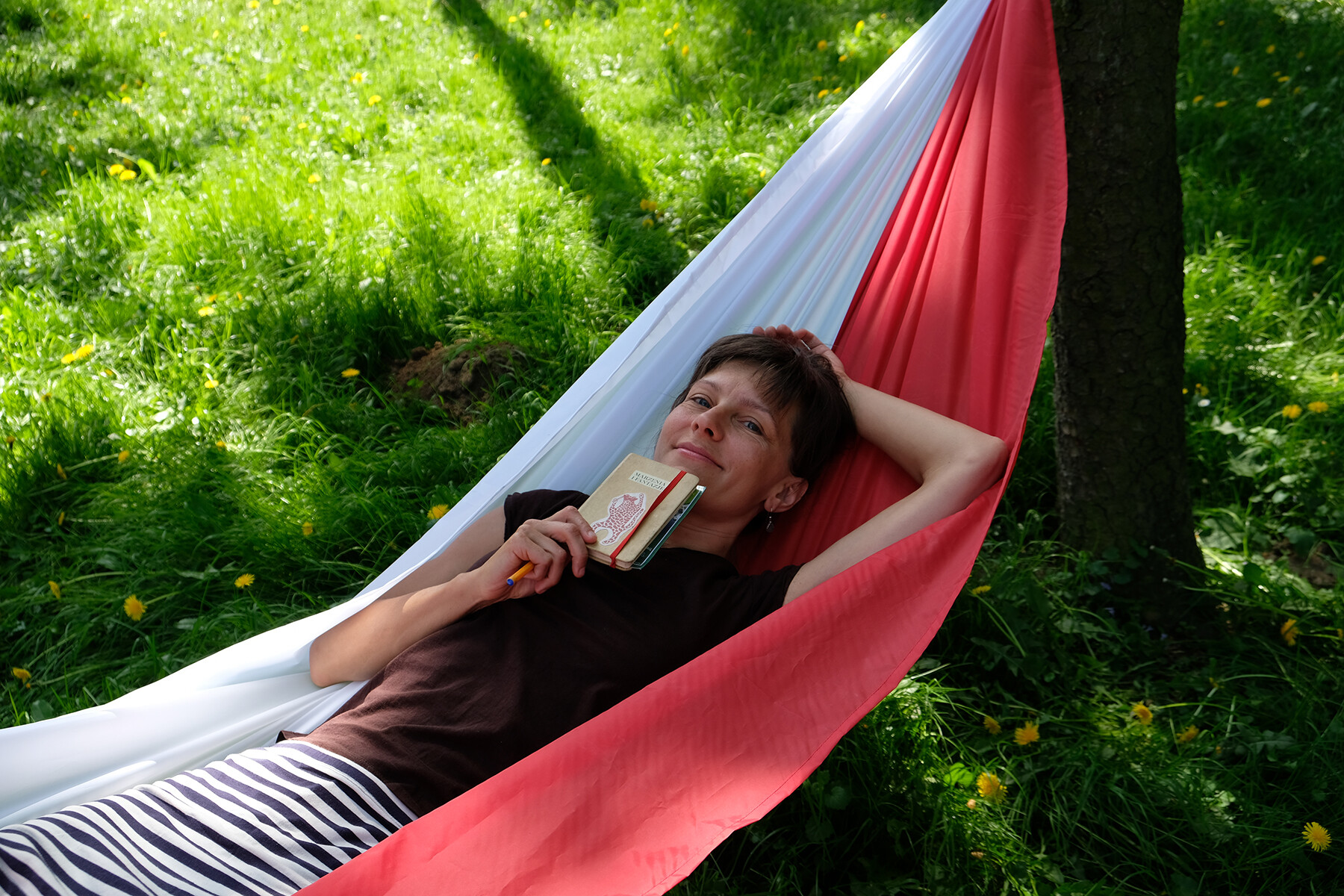
Kasia Rysiak: Zacznijmy od tego, jakie to są hamaki. Są uszyte z białej
i czerwonej tkaniny. Nawiązują wprost do polskiej flagi. Dzisiaj jest trzeci maja,
święto Konstytucji. Natchniona różnymi nastrojami wokół polskiej polityki postanowiłam zrobić coś miłego dla osób, które zostały w mieście podczas majówki. Jest to dla mnie proste przeniesienie sytuacji Polska - hamak - dom. Chcę żeby była
to sytuacja dostępna dla wszystkich, bez względu na narodowość, płeć czy preferencje seksualne - bo głównie wokół tego powstają ostatnio napięcia i walka. Tak pojmuję Polskę i mam otwartość dla wszystkich żyjących tu osób.
N.L.: Sugerujesz, że moglibyśmy zapraszać ludzi innych narodowości na te nasze polskie hamaki, żeby też mogli się odprężyć?
K.R.: Tak.
N.L.: A czy zjawiska polityczne, o których wspomniałaś mogą mieć związek z tym,
że ludzie za mało odpoczywają?
K.R.: Lęk i zamknięcie się przed innym, obcym wiąże się z tym, że dajemy sobie
za mało przestrzeni na poznanie drugiego człowieka.
N.L.: A jak możemy dać sobie jej więcej?
K.R.: Na przykład przyjść do Parku Skaryszewskiego i porozmawiać z sąsiadem
z hamaka obok.
Natalia Latecka: Why did you hang hammocks around Warsaw?
Kasia Rysiak: Let’s start by talking about the hammocks themselves. They are made of red and white fabric, directly referencing the Polish flag. Today is May 3rd, Poland’s Constitution Day. Inspired by the various sentiments surrounding Polish politics,
I decided to do something nice for people who stayed in the city over the long May Day weekend. For me, this is a simple way of bringing together three things: Poland, a hammock, and home. I want this to be an experience accessible to everyone, regardless of nationality, gender or sexual orientation- because these are the very issues that have recently become the focus of growing tensions and conflict. This is how I see Poland, and I believe in being open to everyone who lives here.
N.L.: Are you suggesting that we could invite people of other nationalities to enjoy our Polish hammocks, so that they can relax too?
K.R.: Yes.
N.L.: And do you think the political developments you mentioned might be connected to the fact that people don’t get enough rest?
K.R.: Fear of others and closing ourselves off to those who are different or unfamiliar stem from the fact that we don’t give ourselves enough space to get to know one another.
N.L.: So how can we make more room for that?
K.R.: For example, by coming to Skaryszewski Park and having a chat with the neighbour relaxing in the hammock next to ours.